In Europe, lobbyists are using soaring fuel prices to make the case for more dirty energy
(www.theguardian.com)
from schizoidman@lemmy.zip to world@lemmy.world on 01 Apr 15:00
https://lemmy.zip/post/61791985
from schizoidman@lemmy.zip to world@lemmy.world on 01 Apr 15:00
https://lemmy.zip/post/61791985
cross-posted from : lemmy.zip/post/61791919
#world
threaded - newest
Lobbyists: ‘Hey you know this whole crisis predicated on our reliance on finite, expensive resources from exploited and unstable countries?’
‘What if we did more of that but with slightly different exploited and unstable countries!’
‘Oh and increase our cancer rates by 20-50 times background rates!’
Man Capitalism is just plain evil and anyone supporting it in the 21st century is undeniably a terrible human being.
People do not want to ear this, but depending on your definition of clean, nuclear is as clean as solar, wind and batteries. No source of energy is free from death, carbon emissions and pollution. Solar, wind and batteries requires extensive mining for rare materials and carbon intensive factory production. If we check all factors again nuclear, the number are remarkably similar to solar, wind and batteries.
In a world where gas, oil and coal exists, nuclear must be put on the same category as renewable. We cannot afford to close any nuclear power plant, as closing a nuclear power plant before the last coal power plant is closed, means we are killing people. Numbers do not lie.
Based on a cursory skim through the article, it does not seem to be claiming that nuclear energy is a “dirty energy”.
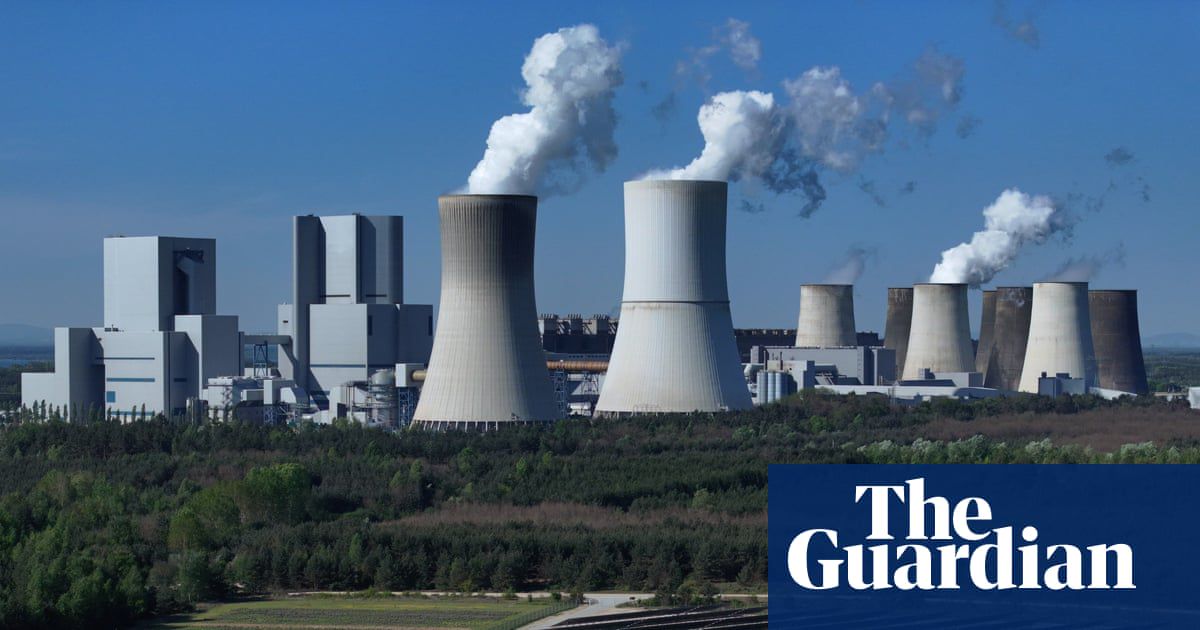
Cooling towers, as depicted in the thumbnail, are not exclusive to nuclear plants. Coal plants can have cooling towers as well.
Was referring no to this recent article cited in the cross posted thread: feddit.org/post/27922091
I’m agreed with you. The German Grüne logic doesn’t make much sense to close nuclear before coal.
However for new production, solar and wind makes more fiscal and technological sense than new nuclear.
In the current European legislative environment yes. We lack common certification rules, standardized procurement and security standards that make sense. Nuclear in Europe is double the time to build and double the cost of nuclear in Japan. This was not always the case. France was able to decarbonized faster than any other big country in the world thanks to the rapid deployment of his fleet. If we fix that, new nuclear in Europe makes sense. We currently lack the technology and the industrial capacity to not be dependent on China for solar, wind and batteries. Nuclear provide energy when you need it, stabilize the grid and ultimately reduce the price of energy (like you see in Finland). The higher the share of renewable in the European grid, the higher the amount of batteries needed. In general one could argue that the best grid mix for lowering external dependencies and costs is 10% to 20% nuclear, and the rest hydro, solar, wind and batteries. In the north of Europe wind is a great resource, but in the most industrialized part of the south (Italian padana plain) the wind potential is very low, as the solar potential in winter when the fog would cover everything. The amount of connections to make a renewable only grid work on the European level are not trivial nor cheap, and we should do anything we can to promote and regulatory environment where the best tool for the job can be deployed.
I mean the industrial barriers to developing new nuclear energy are (AFAICT) similar to the industrial barriers to developing the production and Euro-sovereign supply chain for new battery solar and wind generation. Happy to be shown differently if you can point to me some differences that would have nuclear development require fewer physical resources, time or money.
I think some development in Small Modular Reactor tech is promising. Any in-progress or in-operation nuclear should stay the course. But if there was one technology we could choose to either ride fully into or vastly increase development alongside nuclear and other energy sources, the drastic cut in costs for renewables with battery storage seem to me like the silver bullet to the climate crisis everyone was waiting for, we just need our governments to pursue it NOW. In Italy’s particular case, tidal energy seems very suitable due to its massive coast relative to land size.
The main problem is that in europe there is no single regulatory body for the certification of nuclear reactor. That means that a nuclear reactor certified for france needs to be certified again for UK, Poland or Czechia. The requirements for nuclear are much higher then a solar power plant. Each single material and part needs to be certified and the entire production is tracked (material traceability, QA testing, chain of custody). A valve in a nuclear power plant cost 100 times more then the same valve in a coal plant. There are very few companies that deal with this level of paperwork required, this means often you need to create new production lines. Regulation in nuclear is not outcome oriented, but process oriented. So you do not have incentive to make everything more efficient: you do not care about the end result, you care about every single steps in the process. This make everything much longer and expensive. Post Fukushima raised a lot the cost of all design made before as new requirements caused to modify previous plants. This is one of the main reasons for the delay in nuclear deploy in the last 20 years.
So you’re arguing that the cost and regulation barriers are higher than renewable development. Are those increased costs proportional to the benefit to the higher baseload, and would an equivalent baseload not be able to be met through battery storage?
Yes, the barrier for nuclear is much much much higher then renewable development. We know that the same nuclear reactor costs 3.5 billion in china, 4.5 billion in japan, and 9 billion in Europe. That is a huge difference. This is not just a technology problem, but an issue about regulation and processes. I am not arguing for going back to the regulatory framework before Chernobyl and Fukushima, but to take some lessons from the world of aviation where safety is important, but outcome driven and pragmatic regarding costs.
If we want SNR to succeed we need to make it so that you certify one reactor out of the factory line and then you can build a hundred more without to having to re-certify every single reactor.
Battery can meet the equivalent baseload. The problem is production capacity, cost, connections and the pollution caused by this deployment. Often is simply better to deploy more renewable than needed. Today you need curtailment to manage grid stability, the higher the percentage of nuclear is the higher the dependency on battery and curtailment is raising the cost of renewable.
Is there sufficient uranium mining in the EU? If not then nuclear doesn’t make the EU energy-independent.
cheap uranium can be bought from Canada and Kazakhstan. In Europe there are big reserves in Ukraine. But uranium can also be extracted from water. Getting uranium from the ocean is 3 to 5 times more expensive. But uranium is a minimal part of the cost of nuclear energy. So if we get uranium from the ocean, energy price will raise by 10% to 15%. On fossil fuel power plant the actual fuel is most of the cost of the energy. Furthermore you can buy uranium years in advance, making it much easier to prevent jump in market prices.
I don’t know, somehow that doesn’t sound to me more independent than buying a shit ton of solar from China which gives 2 decades of runway to develop domestic production for replacement. Solar + sodium-ion which os already in production and cheaper than Li-Ion in China.
I don’t mind nuclear btw.
If we can do both we should do both. This is not nuclear vs renewable. They solve different problems. Modern nuclear reactor design like Terrapower are created to work with renewable (using molten salt energy storage). Humanity will not reduce the amount of energy it uses, and we need to force the electrification transition if we do not want to destroy our planet.
I think even with solar, wind, tidal and perfect grid storage nuclear is still worth investing in, simply because its a useful technology to have in some space travel applications, in some cases even more useful than fusion power would theoretically be.
Everyone hates getting stuck because it turns out that one tech from half the tech-tree ago was mandatory for progression.
While I wouldn’t agree that nuclear is ‘dirty’ energy, I certainly wouldn’t put it into the category of renewable. There’s only so much fissile material and that amount is only decreasing as we split the atoms.
True, but with known reserves and no material recycling we have 70 years of material at current rate. If we add undiscovered deposits we have more or less 200 years. If we add ocean deposits we have 60000 years. If we reprocess the uranium in breeder reactors (we have them already built in Russia, China, India) we can potentially arrive at 5 millions year of reserves. Given we are already discussing thorium rectors, this time frame makes uranium not a problem really.
But why do that if we have unlimited solar energy now and only need more panels, batteries and a way to recycle them both?
Because the need for electricity will only grow the more electrification we do, and doing both is better then doing just one of the two. We need to max-out out production capacity for solar, wind and batteries anyway (and by production I mean combination of grid capacity and rate of expansion, material mining and refinement, labor, legislative bottleneck and capital availability). Anything more is definitionally better, and nuclear is a lot of way complementary with solar, wind, and batteries in materials, fuel, grid usage and operational constraint (namely it is dispatchable and can do load following).
The need for power will actually shrink with growing electrification, since a lot of those technologies are more energy efficient.
The need for power maybe (not counting on that given the greater need caused by AI and the rapid industrialization of Asia and Africa), but the need for electricity will certainly not go down. While an electric car is more efficient, no electricity was used before to power the cars is going to replace.
Okay. That is true.
Still I think going back to nuclear is not a great idea. It still relies on fishy countries and is not renewable, takes ages to build and harms the environment through the emitted heat especially in summer (and other problems).
That said, I still massively prefer it to coal and gas. Its not even remotely close.
For one, most remotelly modern coal plants can be repurposed for single core nuclear reactors. So it effectivelly removes the biggest hurdle of nuclear. The upfront cost.
Another reason is that spend nuclear fuel is close to 96% recyclable.
Thirdly the energy production is steady.
Fourth and most important thing. We need to get rid of the fossil fuels right now. Its too important thing to dilly dally with. It does not matter if its solar, wind, hydro, thermal or nuclear energy.
Okay, I have never heard of using coal plants for nuclear and found nothing online. Do you have some sources for me?
And yes, I get the rest, but I would prefer to not use nuclear, but given the current development, I’d prefer going full nuclear over whatever the fuck a lot of countries are doing right now.
Its mostly because the process inherently is just boiling water with resource x and making steam engine go brrr. Coal plants have the infrastructure for the energy generating and logistics allready there and the parts are allready wistanding the heat. Additional bonus is that while coal plant needs weekly refills nuclear plant could produce the same energy with only few refills a year.
Here is pretty comprehensive recearch made in 2022 by DOE It takes account many benefits and hurdles if the process and its not trying to sugar coat it. (Sadly current USA political situation is not intrested pursuing this any further)
Here is good paper that studies the field wider but also aknowledges the potential in C2N conversion
Unfortunately, if I remember right, most coal power plants are more radioactive than the minimum we allow for nuclear plants. While we could convert them, right now I don’t believe that is happening.
Solar relies on China who manufactures using coal, and puts us in the same predicament. It also requires storage, which also relies on China. Nuclear can be done domestically in many places, and nuclear waste is not actually waste, we can recycle that too theoretically.
What we need is a ban on lobbying against nuclear, to decrease costs. France built them in the 70s and somehow despite technology increasing dramatically we now cant, its government created nonsense.
The theoretically is load bearing here. Also China themselves massively build their solar, so it being built using coal is not quite right. Also also other countries were able to build solar before so theoretically they could do so again if sufficiently subsidized.
Whats the lifetime of a nuclear plant in the first place, is it above proven current reserves?
Maybe by the time we run out then something else will be the hot new thing. As far as why countries dont produce solar its because of environmental regulations making it too costly, which is why the large majority of required material is refined in China, so runs into the same problem as nuclear.
In many countries it is possible to build new nuclear plants. They haven’t been built due to economics. When you say the costs are comparable with renewables, the market obviously doesn’t think so.
I never said cost is comparable. It is not, in Europe more so than other countries. Nonetheless you are not paying the cost of the nuclear power plant, you are paying the price of electricity. And nuclear lower the price of electricity (see Finland) reason why petrol state like UAE, or china built nuclear power plant. The cost of nuclear in china is competitive with renewable. China is building 28 new reactors, with 59 already built (average construction time of 6 years and 3 billions dollars each). Not every country can build a nuclear power plant: your grid need to support the massive amount of energy produced by a nuclear power plant, your country need to support the massive upfront cost to build one, your country need to be stable, reliable and not encounter opposition from international organizations as nuclear power plant could be used to produce nuclear weapons, and finally you need to have domestic support for nuclear energy and political commitment across the political spectrum for years to make the necessary regulatory commitment.This makes it very hard to have the condition to build one. Furthermore you have a real advantage if you have the domestic know how in your country, and most simply do not have that.
IRENA chart of worldwide renewable energy additions in the last years.
Share of renewable energies in the expansion by 2025: almost 86%
<img alt="" src="https://discuss.tchncs.de/pictrs/image/f9a3e847-f754-48da-8d1c-785777ecfdea.jpeg">