from breakfastmtn@piefed.ca to world@lemmy.world on 18 Feb 21:59
https://piefed.ca/c/world/p/535156/plug-in-hybrids-use-three-times-more-fuel-than-manufacturers-claim-analysis-finds
While most hybrids are said to use one to two litres of fuel per 100km, a study claims they need six litres on average
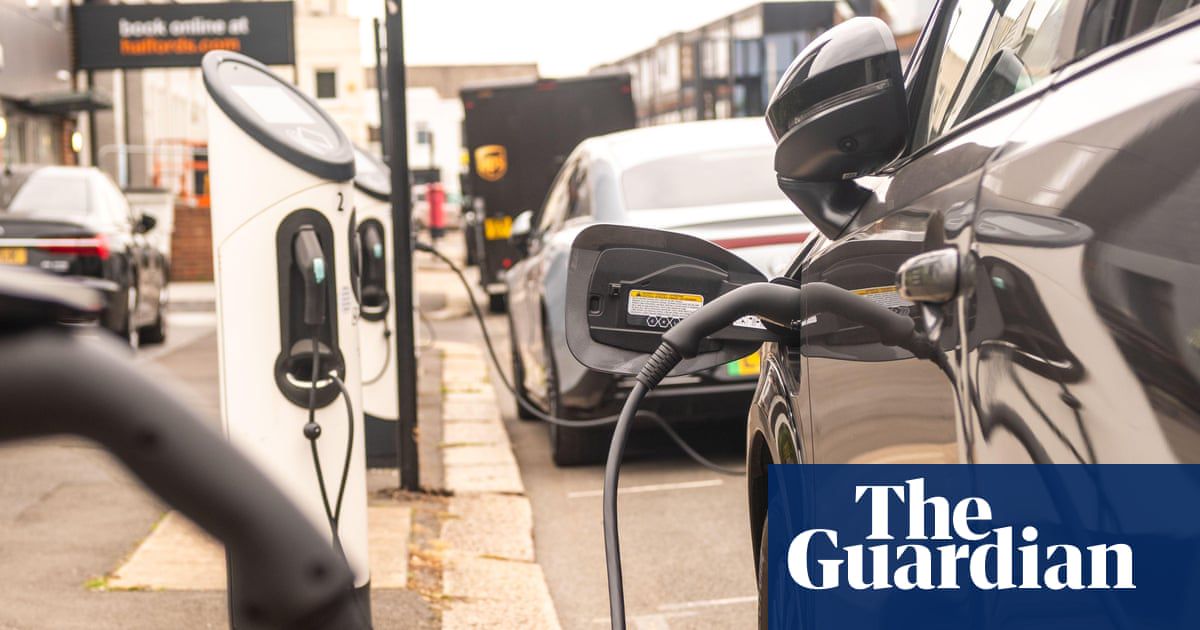
Plug-in hybrid electric cars (PHEVs) use much more fuel on the road than officially stated by their manufacturers, a large-scale analysis of about a million vehicles of this type has shown.
The Fraunhofer Institute carried out what is thought to be the most comprehensive study of its kind to date, using the data transmitted wirelessly by PHEVs from a variety of manufacturers while they were on the road.
…
According to the study, the vehicles require on average six litres per 100km, or about 300%, more fuel to run than previously cited.
The scientists of the Fraunhofer Institute found that the main reason for the higher-than-stated fuel usage was due precisely to the fact that the PHEVs use two different modes, the electric engine and the combustion engine, switching between both. Until now it has been claimed by manufacturers that the vehicles used only a little or almost no fuel when in the electric mode. The studies showed that this was not in fact the case.
#world
threaded - newest
I can say from personal experience that my Chevy Volt gets around 40-60mpg when it kicks over to gas. That said, it rarely does, because my daily commute comfortably inside the battery’s range.
Again, I’ve got a tank of fuel from… several months ago? Barely 7 gallons and it hasn’t run out. Like, I almost never visit the gas station anymore. So, idk. Maybe the Volt was just built better.
Doesn’t gas go bad eventually? Could that be a problem if you end up needing the ICE to turn on?
they actually thought of that when designing the volt. the tank is pressurised to stop evaporation (which causes the concentration of additives to change so they fall out of solution), and the engine runs for a minute or so every month (or if you haven’t started it in a while) to make sure there’s no bad gas in the lines.
if only it had a proper stats screen, came in hatchback form factor, used a type 2 plug in europe, and had five seats, it would have been a perfect car. oh and the battery range is a bit too small, but i think there’s probably someone who can fix that. after all, the batteries are twelve to thirteen years old at this point.
Wow, awesome tech
The Volt was also the most reliable vehicle GM ever made. But they stopped making them because without incentives, they lost money. It’s a lot of complexity and weight to carry around two redundant drive systems, EVs make more sense, but the media drilled range anxiety into consumer’s heads.
I have a different model, but it more or less vacuum seals the gas tank to mitigate that - it is still wouldn't last forever, but without air to react with the aging process is significantly slowed down.
Fuel with ethanol will go bad if it sits stagnant for a long period of time. As long as you are driving the car around or using fuel stabilizer, it should be fine.
It would have to sit years. Not an issue in modern fuel injected systems. Most of fuel stabilizer is ethanol, BTW.
I used to have a motorbike that I hardly ever used and it was so unreliable because of this. I ended up having to get rid of it in the end because it just wasn’t worth the effort for the amount of time that I used it.
They do turn on the ICE if the fuel is old, but it has to be very old, months.
Hence my question. Lol
Based on my interpretation of the article the Porsche plug in was so bad that it skewed the study, it used 85% more fuel than all of the other cars in the study. But it doesn’t surprise me, it’s not the first time Porsche (Volkswagen) wasn’t very trustworthy with their fuel stats in recent years. Something was that the less expensive the car, the better it was on fuel economy, seems logical once you think about it. The more sensible the car the more likely that buyer is to be concerned with those types of stats.
Nobody (expecting to win) is street racing a Volt or a Prius, to be sure.
So there’s little incentive to cheat emissions standards in order to juice performance.
There’s no way it would win a race, but I have to say, I have the latest Prius Prime and it’s actually pretty damn fast, especially for a Prius. They really shook off the underpowered rep with this latest batch.
This mirrors my experience with my 2017 Prius Prime. On the rare occasion when I activate gas mode (e.g., for long trips) it gets 50 mpg no problem. Otherwise it’s an electric car and the gas engine is completely shut down.
During COVID lockdowns, we were driving a lot less. We got a warning message that we needed to burn at least 5 gallons of gas each year to keep it from going stale. So we drove it exclusively in gas mode for a while, then went right back to not caring about gas prices at all.
The Prius PHEV basically turns into a regular Prius once the battery is empty because Toyota designed it for low consumption. Others like Volkswagen just needed PHEVs for tax reasons, so the actual consumption does not matter to them.
That’s not correct, but proves my point, people have no idea how these cars work.
A Prius uses an electric motor to assist the gas motor, the primary drive is the gas engine. Kinetic energy is recovered and stored as electrical potential.
PHEVs are EVs with a gas generator on board. The gas motor only charges the battery.
PHEVs do indeed typically have the output of their engines connected to the wheels through the drive train. You’ve described a range extender. Vehicles with a range extender do not have the gas engine connected to the drive train directly.
Unfortunately „most people“ in this case includes you, but not me. But we can change that 😉
The major differences between the Prius HEV and PHEV are that the battery has a larger capacity and that it can be charged externally.
The transmission works exactly the same and on both models the gas engine can be used to provide traction to the wheels without converting everything to electrical energy first.
It also has (at least) two electric motors - again, both HEV and PHEV.
Look up Hybrid Synergy Drive on Wikipedia. There are also some good explanations on YouTube. It’s at the same time a quite simple, yet very smart design. I find it fascinating what the Toyota engineers have come up with.
You’re from the US.The US fixed the bullshit method of claimed fuel mileage about two decades ago. This article is all about the EU. Their official fuel efficiency ratings still have room for bullshit.
It’s not even that, it’s the abomination of combining electric and gas “efficiency” into a single unit. That number is always going to be trash when one of those variables represents zero fuel usage and other represents pure fuel usage. In the US, the “MPGe” rating suffers from the same exact issue.
The EPA in the US doesn’t do that, buddy. They give 2 separate ratings. You also don’t understand what MPGe is measuring. MPGe is a pure electric mode. The gas used rating in MPGe is for fuel equivalent it would take to charge the battery back up.
It then also shows the MPG rating, and that rating is what you’ll get after the battery from driving in all electric mode would be too drained and the ice motor will be doing most of the work.
You were charging it. The PHEV drivers are not charging at all, they were told the cars were self charging. Many use street parking and can’t charge. They should be driving hybrids, not plugins they never plug in.
You have to work at a car service center to truly appreciate how stupid some people are, and they are not rare.
Fleet vehicles are skewing numbers too. They often don’t get plugged in regularly and use the gas engine far more.
Yes From the data tables in the research paper, company cars were seeing roughly 25% electric drive share, private 50% - quick back of the napkin math.
I met someone who had been given a PHEV company car. They had been driving it for 6 months, and I was the first person who informed them that their car could be plugged in to charge. They thought it just charged itself while driving.
I doubt this is an isolated incident.
Many companies and councils are trying to look more green by making the switch to EV, but don’t want the “risk” of an actual EV. I believe they are the main customers for PHEVs, and they are also the least likely to recharge them.
I’ve even heard of people deliberately refueling and not recharging because they have a company car for fuel, but would have to pay for electricity themselves.
Sounds like the companies should also issue their PHEV’d employees a portable gas-powered generator they can fill up when they fill the car to then use at night to charge the car’s batteries. Bureaucratically the math is flawless.
Because the car companies were marketing them like that. They called them, “self charging”.
Idiots believe it because they have no idea how a vehicle works. They just drive until it breaks.
No, this is poorly framed information. They don’t “require” on average 300% more fuel to run. The drivers choose to charge their cars 300% less often than manufactures suggest. This is skewed by rental and fleet cars whose users never charge the car, and by owners who treat their car as a normal hybrid instead of charging it. I was once given a plug-in hybrid van as a rental car but never told it was a PHEV. I didn’t figure it out until the next morning when I was walking up to it and saw the charging cover. My hotel didn’t have a charger, so I couldn’t really do anything about it; but if I were a normal person and not someone who has owned multiple EVs then I wouldn’t have even thought to charge it.
Also, the Porsche one makes total sense. The car is going to burn through battery charge and then hit the gas engine faster when, as expected, Porsche drivers drive them like a Porsche.
It really is insane. They only rate the range for 29 miles and then get 22-29MPG and make something like 540HP. I wonder (but didn’t bother looking up) if their design allows the electric motor to boost the power of the gas engine rather than boost fuel economy in which case you’re talking about smiles per gallon not miles per gallon.
The study is framed perfectly as it has exposed this issue. Now we can make political decisions accordingly, to either stop subsidizing useless PHEVs or to enforce their correct usage through a mixture of incentives, infrastructure and punitive measures.
Agreed. In the Netherlands we lost road tax incentives for PHEV. It does make sense, but we should probably make fuel more expensive as incentive. It currently still has some discount to compensate for the fuel prices rising due to the war in Ukraine. If you are stupid enough to buy a heavier PHEV and then not use the battery: congratulations: you pay more. If you charge it properly you’ll be off cheaper than ICE drivers. I recently bought a new PHEV and after ~1700 kilometers I still have half of the gas tank filled. So roughly 1.3 l / 100 km (not sure if the dealer actually filled it to the brim). It is advertised as 0.5 l /100 km so yeah: 160 percent worse than advertised. But this was mostly in cold weather and snow, with winter tires and I think engines usually consume a bit more if they’re brand new (and cold). So I’m not disappointed nor surprised.
Excellent analysis, thanks too for sharing your numbers, quite interesting seeing how much you can save with proper usage of the vehicle!!
Misleading article. Someone reading this may think that a PHEV will have higher fuel consumption than claimed. When it reality it should be clarified that fuel efficiency is based on roughly 75% electric drive share.
I see the point where they should adjust that down based on real.world usage.
But… if you are expected to drive 75% electric based on battery range and your usage, you will hit the manufacturers claims, give or take
How is it misleading?
Manufacturers make claims about fuel consumption. Based on studying real-world data, fuel consumption is significantly worse than claimed. The study authors say that internal combustion engines are active much more frequently than claimed. They propose that manufacturers and regulators use real-world data because it’s more accurate. Is that such a bad idea?
It’s misleading because it is reporting a very generalized average fuel consumption (actual usage) of all PHEVs while manufacturer claims are based on individual vehicle potential.
Manufacturers cannot control how people use their cars, they can only assure that the cars operate the way they claim when used the way they suggest.
But isn’t that like Apple saying “you’re holding it wrong”?
I don’t think it’s being portrayed as a manufacturer conspiracy. When Porsche says their tests are “based on the legally prescribed EU measurement procedures,” I’m sure they’re not lying. But these data say pretty clearly that those tests don’t predict observed reality. If they don’t, what good are they really? Shouldn’t we use testing that better reflect observed fuel usage?
I think it’s more like Apple saying you get 24 hours of battery life on an iPhone, but in reality, if you use it frequently or play games, the battery underperforms to the stated life. If these vehicles are driven aggressively or not recharged at mfg expected intervals, like fleet utilization, that would skew the general mpg for the population. I’m not saying that’s what happening, but it’s a possible explanation.
I guess it’s just that 300% on average seems like a lot, y’know? Like, if the average iPhone user was getting just 8 hours of an advertised 24, people would be pretty pissed. They’d probably ask for testing that better reflects real-world usage ;)
Outrage seems to be inversely proportional to experienced convenience, not necessarily performance disparity.
But if 50% of iPhone users are professional mobile gamers, their utilization is an outlier skewing the sample. I’d like to see the population in the sample for this study. For the average PHEV driver, they probably get close to the mfg estimate when driven as expected but the generalized data encompasses non standard users.
ICE vehicle manufacturers don’t give MPG estimates based on burning out at every stop light, driving with various octane fuels, or many other factors that can effect fuel economy. They give estimates based on a certain usage. I have a Subaru WRX and average 2-3 more mpg than mfg estimates on hwy usage. That difference is in my favor, but it still shows that estimates are just estimates based on a baseline use.
If Apple were dismissing half their users as outliers, I still think people would be pretty pissed…
Based on what though? Is this just an assumption?
Unfortunately (and annoyingly), the Guardian doesn’t link to the study. I took a quick look and found a similar study from 2022 (PDF) but nothing recent. Their conclusions are similar and they do differentiate between private and fleet vehicles.
Yea. All of my theories on this are just based on assumption. Everything I mentioned is probable and at some degree does play a part in the numbers. Some people drive crazy, some don’t charge, etc. There are some other anecdotes in this thread that support some of my claims. One comment mentioned a PHEV driver thought the battery recharged while driving, not knowing it needs to be plugged in. That’s certainly a more extreme case, but I would imagine there a lots of users that drive too long between charges. IF that is happening widespread, then people are using the vehicles outside of mfg specs. We don’t know the exact reason and probably never will get that sort of detail, but it’s a possibility, and if it’s true, that would take the liability off of the mfg imo. All speculation though.
Well, I think we both effectively said our bits. Fun disagreeing with you. Cheers 🍻
People are buying PHEVs and not plugging them in. Ever. Service centers can see how often the batteries are charged and it is common to see people who never charge their PHEV.
Part of the problem is auto consumers are idiots, and years ago at car shows, these cars were being marketed as “self charging”.
This is not new. When VW first sold the Beetle to America, they advertised it as maintenance free because it was air cooled. People never changed the oil.
The level of STEM ignorance has never been this bad. People have no idea how anything works, and don’t care.
Car manufacturers have always overstated mileage ratings because their tests are done in very controlled environs under ideal conditions.
They cannot control how you use their vehicle, but they can baseline it. That’s what those ratings have always reflected, and why. “Here is the way this car performs under ideal circumstances. YMMV”
There’s a guy at my gym who leaves his lifted brodozer idling for his entire workout.
The way I read it is:
Sadly, it sounds like Porsche drivers may fall into the first category and Toyota drivers in the second. And there are enough Porches to skew the MPG of the whole PHEV class.
(it’s also possible that Porsche/VW/Audi just make PHEVs that score well on gov’t tests but poorly in the real world, though I’d lean towards the drivers. But the article title really implies that all PHEVs get shockingly bad mileage)
The article is designed to support the anti green agenda now popular. Like that Volvo white paper that claims EVs take more resources to make, but no one read that paper. They compared ICE to EV, but excluded the engine and transmission metals from ICE. I guess those grow on trees.
The media constantly quotes this paper and no one actually read it.
No. It’s like blaming ladder companies because people fall off ladders while drunk.
If a person designs to bash in their face with a hammer, government should not ban hammers.
Americans love to sit idling their V8 trucks.
Because they are more energy efficient…
Because when in pure electric mode they do use little or no fuel (different cars have different architectures but this is generally so)
But, yes there is a good point buried in there. Europe needs to update rules on efficiency claims. l/100km in gas mode, and electric range gets you pretty far.
I see both of those listed pretty much everywhere when it comes to plug in hybrids.
Because the outcome of that “statistic” highlights phev as a bad purchase. It took far more scandal and coverup exposing to reveal more egregious figures from ice cars, for example the Volkswagen testing thing.
If fuel economy can be tempered with real-world use effects for ice cars, the bigger picture is warranted for this study as well.
plug in hybrids are impossible to properly quantity fuel usage. because unlike normal cars where you estimate highway/urban use, now you have to also consider EV/ICE use.
if you rarely use the engine, then your fuel usage is negligible. while if you mostly drive it like s hybrid and never charge it, it’ll be just as good as a comparable hybrid.
Statistics exist, taking a sample of thousands of PHEV drivers and examining fuel consumption is exactly what we can do to quantify fuel usage. And the reality is that, on average, they use up more fuel than my 2006 diesel I got for 2000€. For the vast majority of people, PHEV are just a scam
acreage is meant to give you an estimate of how much is it going to cost you, if it is off by 20% based on you doing now highway than the average, that’s fine.
but if it’s off by 100%? that’s useless.
also, averages only works if the data falls under a normal distribution. if you have people charging their cars at night, and others who don’t, that is not a normal distribution amd averages are useless
Averages don’t only work if data falls under a normal distribution. I can have two very non-Gaussian distributions for fuel usage of two vehicle types but one of them has much lower fuel consumption than the other, I can vouch for the lower one using the average alone.
for plug in hybrids, they should give you average fuel consumption for hybrid use only AND EV range. Trying to get a total average use is useless and removes all the important information.
I had a plugin hybrid once, rarely used it for trips that needed fuel. if your daily driving fits in the EV range, then you don’t really care about fuel consumption.
This article is less important for individual consumers (whose fuel usage varies wildly depending on their needs and their routines) but it’s extremely important for policy: PHEVs have a very similar climate change result on average than my 2006 diesel car.
Do you know why diesels are no longer made? It’s not just about fuel consumption. They are filthy oil burners sold illegally on faked data and you are wearing it like a badge of honor. Read.
Not a badge of honor, I’ve participated in climate research in my career, I’m fully aware of the pollution issues of Diesel cars regarding particulate matter and nitrous oxides. What do I do about it: I don’t drive it in cities. I only use my car for trips that take me between towns that have no solid public transit communication (which is unfortunately the case for many towns near Madrid among each other). The nitrous oxide impact is mostly local and, if you look at NO2 pollution maps, the problem is pretty contained within cities, so driving it far from urban centres has a lot less of an impact. As for climate change effect, it has a similar effect to the average contemporary hybrid cars per the study, and the fact that I bought it used means I’m not stimulating the production of new cars, which produces a ton of emissions, instead I’m spending my money locally fixing the car, which is arguably more sustainable than buying new ones with similar fuel consumption.
Its misleading because they’re pushing this like it’s Dieselgate when in reality it’s just that the “MPGe” rating (and metric equivalent) is just a dumb fucking estimation. Porsche states that you get 29 miles electric range at most and then everything else is 22-29 MPG. That’s how PHEVs should be quantified.
Imagine a Porsche owner driving 20 miles to work, charging, and then driving 20 miles back home. How much fuel was used?
Now imagine another Porsche owner driving the same 40 miles but in one trip. How much fuel was used?
How about a third Porsche owner driving 20 miles but flooring it after every stop light in cold weather, not charging, and then driving 20 miles back home. How much fuel there?
These would all give wildly different results which is why any combined estimation will be wrong regardless of the method. Same goes for ICE vehicles but to a lesser extent since they’re always burning fuel. Combined city/highway is going to be different if that ratio is 90/10 versus 10/90. Its going to be different based on weather, driving style, number of passengers, etc. The whole point of this is to simply compare vehicle efficiencies in an apples to apples way not perfectly predict what you’ll actually experience driving the car.
There’s no scandal here just sensationalism.
Why are people so bizarrely defensive about this?
This isn’t sensationalism. It’s a scientific study of actual real-world fuel use based on data from thousands of vehicles (at least ten thousand, I assume, based on earlier studies). If, as the study author says, internal combustion engines are being used more frequently than estimated, should it not be addressed? Should we not be aiming for higher efficiency in these vehicles? If tests aren’t accurately predicting usage, should we not develop more accurate tests?
Its not defensiveness it’s just recognizing the issue for what it really is. You can change the estimation calculation all you want, but it will always be wrong because the variables being used don’t blend together well. You can make gas engines that get 100MPG or even 1000MPG but it won’t make for an accurate estimation when averaged out with ∞MPG or 0GPM.
That’s a problem with the estimation not with the manufacturers. The manufacturers tell you exactly what the electric range is and also what the ICE fuel economy is. It’s trivial to apply these values to your driving habits to get an estimation for your use case.
As an example, I’ve been eyeballing the Prius PHEV with its 44 mile range (and 47MPG hwy). My commute is about 45 miles each way and I have access to chargers at work, so my daily fuel consumption would either be 0.04 gallons (charge at home and work) or 1 gallon (charge at home only) giving a 2400% variation in fuel economy for the exact same trip based solely off my actions alone, having absolutely nothing to do with the car itself.
Here you’re conflating two separate issues and highlighting exactly why people are calling this misleading. You can change the calculation all you want but that isn’t changing the efficiency of these vehicles and this study doesn’t demonstrate that these vehicles are inefficient. All it shows is “your MPGe or l/100km is greatly effected by how often you stay on electric power” and that factor is solely dependent on the driver and ranges from near zero to infinity regardless of the vehicle chosen.
It doesn’t get more accurate. We should just scrap the combined “MPGe” (and EU equivalent) and stick with “electric range” and “MPG”. Both of those can be fairly accurately predicted as separate values. How they combine is entirely up to the individual.
The issue isn’t really that the estimate is wrong, it’s that it’s wrong by an enormous amount – and one that’s been increasing every year. I don’t think that the study is trying to say that these vehicles are inefficient as some kind of absolute judgment, but that they’re less efficient than estimated (although there are big differences based on vehicle make and model).
I don’t think the problem really lies with manufacturers, it’s that the current tests aren’t accurate enough to predict real-world usage closely enough. Although, driver input is mediated by computer systems and if on-board systems are being too aggressive in switching over to ICE, I suppose that’s a manufacturers problem.
Really, they’ve been doing these very large studies for a long time. The sample size is large enough to capture the full diversity of driving styles and it cannot be a few outliers skewing results. Since 2012, the disparity between estimated and observed fuel usage has grown every year. Why? Why is it changing and why is it always changing in the same direction?
It getting worse over time I would think is partially a function of customer mix changing.
You start with early adopters who are more eco conscious and then now entering mainstream, and also people choosing plug-ins for performance purposes.
I agree with everything you’re saying, but this part. As you stated before, those are intended to allow for an apples to apples comparison and make it easier for the consumer to judge a car’s funel economy, without having to do their own math (which - lets face it - most people suck at).
If the underlying usage pattern doesn’t reflect a typical average use, that’s an issue, that can be adressed. And when studies show that they don’t why not take that as a call to improve upon the methodolooy?
There’s always going to be the caveat that one’s one usage pattern might deviate greatly from the standard, and absolutely it’s a must, that the individual values are indicated, so people CAN do their own math. But having a standard combined measure is still a useful tool.
Addendum. I have to admit to really only having read the article just now.
This is the real underlying issue here. It’s the EUs regulation on CO2 emissions reduction, that car manufacturers are abusing here. They are designing their car in such a way, that they look good on paper and can pass the requirements of the regulation, while their real-world emissions are much higher. (And in that regard, it’s not too unlike Dieselgate. Minus the intentional technical manipulation ofc.)
While your claim, that it’s the individuals responsibilty how they use their car is obviously true for an individual car’s fuel consumption, that realization is also utterly useless as a basis for effective policy. There needs to be a standard, and that standard better reflect an empirical assessement of reality.
On the assumption phevs have the combustion engine off unless they are in hybrid or performance mode:
I think it’s decisive because the article’s focus is fuel consumption but fuel consumption in phevs is actually just a proxy for driver behaviour. (Once you factor out differences between models)
So while the study does show that phevs technically have worse fuel economy in real world usage, it doesn’t show they use more fuel in either electric mode or in hybrid mode than previously believed.
The conclusion is useful for understanding the overall impact of phevs on petroleum consumption, air quality and global warming, but it’s misleading when evaluating what kind of car you should buy.
Since you know how you drive, learning new information about average driver behaviour doesn’t factor into your decision on what kind of car you buy.
The environmentally conscious answer is still no car if possible, electric if you need a car but most journeys fall within the range limit and phev if you need a car for frequent long range usage.
Tldr; it’s contentious because the article reports information useful for policy decisions to a general public who are making individual consumer decisions where the information is misleading.
This is about owner behavior, not the design of the vehicle. If I had a PHEV, for my commute, I would use no fuel if I charged overnight.
Idiots are paying extra for PHEVs, then not plugging in. What is the point.
Likely these owners actually have no idea how their cars work.
Because the stupidity of consumers is hard to under estimate by engineers.
The problem is not the car designs, it’s that idiots don’t plug in, plug in hybrids, they run them only on gas. They should be charging them overnight. Regardless, they still use significantly less fuel than just ICE designs.
I got a Chevy Volt last year and I went from spending $350 per month on gas to spending around $20 per month (up to almost $30 when it was so cold last month).
No, you’re actually spending $900 per month on fuel but don’t realize it because the manufacturers lied about it.
Shit… and here I’ve just been blaming tariffs and inflation for my money disappearing!
Damn those manufacturers.
The theme of this article and thread.
Drunk people are falling off ladders. US solution: sue ladder makers.
Just curious, did you notice anything in your electric bill?
16kwhr battery, charging overnight, would cost $2.90 a night.
Affordable! Assuming that’s 23 days a month, that would amount to some $70
Not to throw shade, but why the fuck would you want to maintain 2 entirely separate power trains. It’s a recipe for extra maintenance costs in my view.
BEV4ME.
I’m not sure about how ALL plug-in hybrids work, but I know that most models a single, electric, power train. The gas aspect is a generator that can power the electric motor and offload it’s excess power into the battery. That way when the generator is needed it can almost always be at it’s optimal power setting.
With the Toyota kind, it’s both, but they have a special transmission/eCVT for it, rather than just bolting a motor to the driveshaft.
The motor’s also responsible for the engine gearing in that case.
The PHEV just uses a beefier motor, so it doesn’t need the engine to move the vehicle.
That is a hybrid, not a plug in hybrid. No transmission on a PHEV, it’s an electric car.
I have a PHEV with 130-ish kilometer range, but the ICE part has an actual automatic gearbox with clutch. There is multiple ways to combine combustion and electric, not just the range-extender way of the Volt. Had a Volvo V60 before this with combustion engine in the front with gearbox and electric motor in the back. If you turned both on you got four wheel drive or loads of power.
For Toyota, it’s both. Both the hybrid and plug-in hybrids use the same drivetrain, except the PHEV/Prime versions have more powerful motors, so they can power the car at higher speeds than their hybrid counterparts are. Honda’s newer hybrid/plug-in hybrid drivetrain uses something similar.
You’re thinking of the one Nissan uses in their cars. They have a similar setup to a diesel-electric locomotive (engine drives generator, which powers the motor to drive the wheels).
The definition of PHEVs is that they are just EVs with a gas generator on board.
FWIW: https://en.wikipedia.org/wiki/Hybrid_vehicle_drivetrain
It’s definitely no longer 2016, but this is the type of hybrid I am referring to. 2 engines provide power, meaning 2 points of maintenance and potential failure. This was what dissuaded me from buying one and pushed me to full BEV (circa 2020)
IMO No matter which way you slice it, a BEV with its ONE gear has less moving parts, less whirling bits to time with belts, and less complexity. Less to go wrong, less to keep lubricated.
The only advantage I can think of on a hybrid is less weight (so stopping in an emergency or on wet pavement). Where I live the charging infrastructure is dense enough that range is no longer ever an issue.
Apparently though even the fuel savings are exaggerated per this article.
It’s not two entirely separate powertrains though, it’s usually just an engine paired to a hybrid motor/transmission combo and they’ve been on the roads for decades, so it’s easy to see what their typical repair costs are. A Prius can take you hundreds of thousands of miles with negligible repair costs.
The truth is in urban cab fleets. I’ve been in Prius cabs in SF with over 300,000 miles. No cab company is going to use a Dodge or Jeep.
And yet, they in fact last a lot longer than ICE.
Also, they are not two separate power trains, this is what that Boomer idiot Sandy Munro keeps saying when he doesnt have Elon’s dick in his mouth. For a guy who sells himself as an engineer, he says really stupid things and the real engineers around him roll their eyes.
For the record, PHEVs have one power train, the EV. The gas motor is just a generator, and it runs at one speed only with no need for gears.
No different than buying an EV and carrying around a gas generator in the trunk for when the battery charge is gone.
And this is a commendable achievement, but we are (or at least, I am) talking about the article in this thread, and the title and subject of the article was about the misleading fuel consumption of PHEVs, not the fact that they would be on the road, burning more fuel than they were purported to be burning, for longer than we anticipated them to be burning more fuel than they said they’d be burning.
So I own one of these vehicles and I was thinking there’s no way this can be because I can see my fuel consumption and it is very low. But according to the article it varies greatly by model, and mine was mentioned as being on the low end.
For me at least, I can hear when the engine turns on and it does not do so until the battery range is used up, so there should be no fuel usage during short trips. It seems quite strange that some vehicles would work otherwise.
I have a PHEV and the gas engine shuts off completely when in electric mode. I don’t see how it could be using gas when it’s not running. Are they confusing the hybrid mode with electric mode?
It depends, some use the engine to charge the battery (e.g. the Honda Civic).
The civic isn’t a PHEV
You’re right, my mistake. But for example, the BMW 530e G60 does have a button to charge the battery from the engine, and it is a PHEV. So it does exist.
Then there is the BMW i3 which is fully electric with an optional “range extender” which is basically just a gas generator that charges the battery while you drive.
And it turns out a lot of the time that’s more efficient. Hence the Honda Civic.
The article is horribly unclear: it seems to say that PHEVs are no good, but “the main reason for the higher-than-stated fuel usage was …that the PHEVs use two different modes, the electric engine and the combustion engine”. Well, so do non-plugin hybrids. I doubt they’re saying that plug-in hybrids are worse than non-plugin, but you might guess that from the title.
The article states that Porsche PHEVs used 7 liters per 100 miles (33.6mpg), but Kia/Toyota/Ford/Renault used “85% less” (1.05L/100k or 223mpg… maybe about right if driven 75% from plug-in energy).
Porsche mentioned “different usage patterns”. I can buy that a typical Prius owner is plugging-in every night, filling low-rolling-resistance tires to 54psi and driving like grandma, and a typical Porsche owner… isn’t. If you want apples-to-apples, then compare a gas Corolla vs a Prius vs a Plug-in Prius, where the cars are from the same city/suburb, and similar owners (e.g.: no ubers, no regional sales reps).
This “study” is evaluating real-world use of one class of vehicles, and not other vehicle types; then using the dismal ways some people drive to imply that this particular class of vehicles is the problem.
I think the point is that PHEVs do not achieve the real world emissions promised by the manufacturers, which would call into doubt reliance on them to save the climate as well as tax reliefs. Particularly, company cars are historically subsidized too much, and they get even more subsidies if they are hybrids, only to then never charge them.
My 2003 petrol car gets 6 litres per 100km. Even if the PHEVs are running like a normal hybrid 100% of the time, that economy is trash.
My 2006 diesel swallows 5.1L/100km, and it fits 7 people inside. New cars are mastodontic for no fucking reason
Your diesel spews huge levels of dangerous pollutants far worse than more C02 from modern cars.
My diesel is prominently used in inter-town roads, not in towns themselves, where such pollutants like nitrous oxides affect a much less significant amount of humans. Also, it cost me 2000€ + 1500€ in repairs.
Which is why diesel cars are fitted with high efficiency filters.
Diesel fumes get a really bad wrap because you can see black smoke on old or deleted rigs. In terms of work produced diesels had to beat and will never be replaced. Gas cars produce far more co and CO2 than any diesel, which is bad for environment. Diesels produce more NOx fumes and soot, which is worse for human health than it is for the environment. (Not that it isn’t bad for environment ) Overall diesels just more energy dense and you don’t need near as much to produce the same work as a gas job, and electric will NEVER replace diesel in container boats or semi trucks for goods transport. Do not mistake this as me saying we should all drive old diesel rigs! Just saying for moving large mass it’s pretty impossible to replace with today’s or tomorrow’s tech, and the idea that diesels are dirty and bad is simply wrong.
People in this comment section are obtuse as fuck, I don’t know if willingly or not.
Thanks for posting the study, they’re completely missing the point, and it was an enlightening revelation to me