betterdeadthanreddit@lemmy.world
on 09 Jul 14:20
nextcollapse
Do it. Maybe then we could finally close the book on this whole Russia thing and see what grows from its ruins once they cool down.
marxismtomorrow@lemmy.today
on 09 Jul 14:42
collapse
I promise you killing a trillionaire’s objectively worthless pet project that is pretty universally hated outside Ukrainian military, the RV community, and the poorer end of the Yacht community is not going to end in any retaliation besides a strongly worded letter about temporarily causing additional space debris.
betterdeadthanreddit@lemmy.world
on 09 Jul 14:45
nextcollapse
A guy can dream.
RIotingPacifist@lemmy.world
on 09 Jul 16:17
collapse
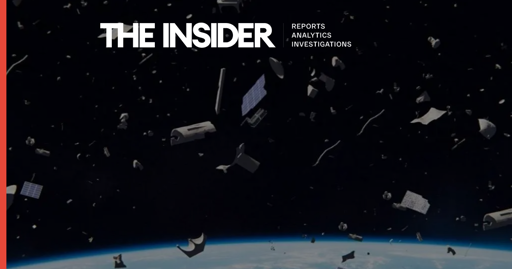
Is Kessler syndrome anything more than just theoretical? Like… isn’t stuff supposed to all burn up in the atmosphere — eventually?
RIotingPacifist@lemmy.world
on 09 Jul 16:46
nextcollapse
It’s theoretical in that it hasn’t happened yet, but it’s a chain reaction it’s pretty basic math, if the debris up there generate new debris by hitting other satellites faster than the debris burn out then it’s pretty certain it will happen.
Fair, but I still feel like the effect might be overplayed. Any impact is going to generate a lot of heat, and any debris is going to have a lot less structural integrity.
Let’s say you actually wanted to inflict Kessler Syndrome on an alien species. You’d find that the altitude makes the difference between hours and centuries of syndrome effect. Debris at 200-500km might get you a few months, whereas 1200-1500km might get you a few centuries. The difference would be atmospheric drag, right?
Kessler Syndrome is also a chain reaction. You wouldn’t deploy the material, it needs to already be there [in the form of satellites]. But modern practice is trending toward lower operational orbits for large constellations, isn’t it?
I feel like you’d need to deploy satellites with a pretty awesome combination of sheer throughput and sheer ignorance, in order to create the right conditions for a lock-in risk. Worst case, in our current situation, I feel like we would have occasional crashes leading to small localized debris clouds that mostly disburse without causing a cascade.
Why would anything else be more plausible is my main question. Why would so much material be in just the right altitude to cause such a dramatic effect? You’d just don’t build important things in such risky ways.
threaded - newest
Do it. Maybe then we could finally close the book on this whole Russia thing and see what grows from its ruins once they cool down.
I promise you killing a trillionaire’s objectively worthless pet project that is pretty universally hated outside Ukrainian military, the RV community, and the poorer end of the Yacht community is not going to end in any retaliation besides a strongly worded letter about temporarily causing additional space debris.
A guy can dream.
Any level of additional space debris is risky: en.wikipedia.org/wiki/Kessler_syndrome
Is Kessler syndrome anything more than just theoretical? Like… isn’t stuff supposed to all burn up in the atmosphere — eventually?
It’s theoretical in that it hasn’t happened yet, but it’s a chain reaction it’s pretty basic math, if the debris up there generate new debris by hitting other satellites faster than the debris burn out then it’s pretty certain it will happen.
Fair, but I still feel like the effect might be overplayed. Any impact is going to generate a lot of heat, and any debris is going to have a lot less structural integrity.
Let’s say you actually wanted to inflict Kessler Syndrome on an alien species. You’d find that the altitude makes the difference between hours and centuries of syndrome effect. Debris at 200-500km might get you a few months, whereas 1200-1500km might get you a few centuries. The difference would be atmospheric drag, right?
Kessler Syndrome is also a chain reaction. You wouldn’t deploy the material, it needs to already be there [in the form of satellites]. But modern practice is trending toward lower operational orbits for large constellations, isn’t it?
I feel like you’d need to deploy satellites with a pretty awesome combination of sheer throughput and sheer ignorance, in order to create the right conditions for a lock-in risk. Worst case, in our current situation, I feel like we would have occasional crashes leading to small localized debris clouds that mostly disburse without causing a cascade.
Why would anything else be more plausible is my main question. Why would so much material be in just the right altitude to cause such a dramatic effect? You’d just don’t build important things in such risky ways.
Not until it decays from orbit. We have an incredible amount of junk in orbit.
orbitalradar.com/space-debris-statistics
<img alt="" src="https://lemmy.ca/pictrs/image/298a0193-1acb-49c9-90ca-2003d9ad0e28.png">
I have conflicting feelings about this.