Eyal Weizman · All they will find is sand: Gaza’s Yellow Line (www.lrb.co.uk)
from pete_link@lemmy.ml to world@lemmy.world on 24 Apr 14:37
https://lemmy.ml/post/46371617

23 April 2026

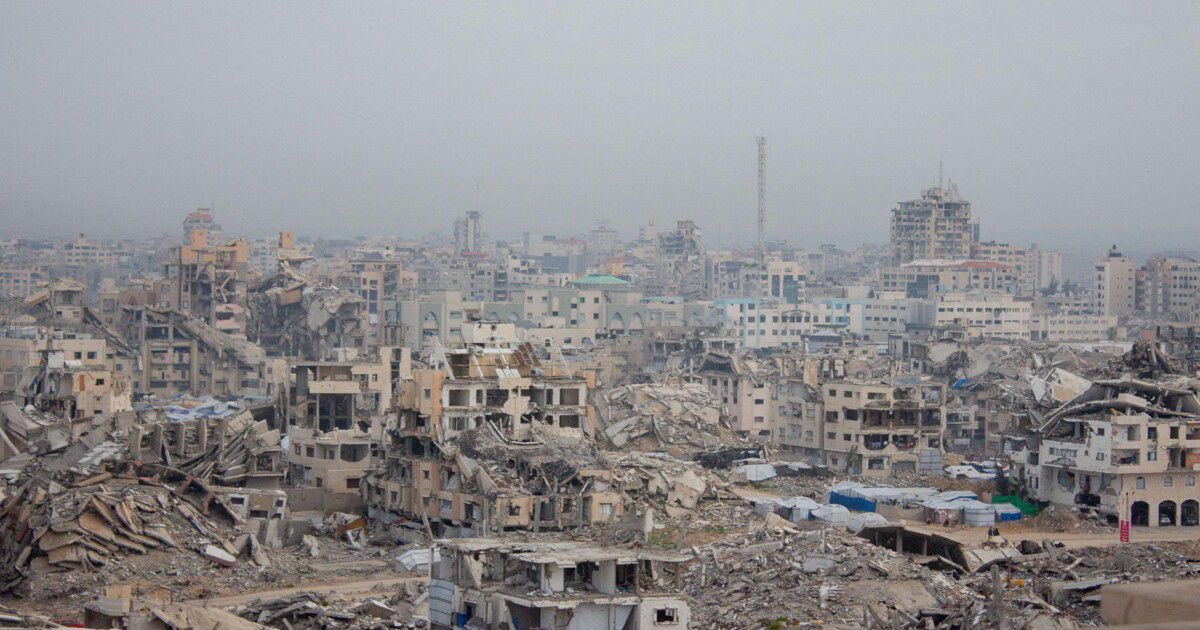
he​ UN Genocide Convention of 1948 lists five acts that constitute genocide when committed with the intent to destroy a group in whole or in part. The first two concern mass killing and serious bodily or mental harm. The fourth and fifth are concerned with interrupting the biological continuity of a group. The third prohibition, framed in Article II©, forbids ‘deliberately inflicting on the group conditions of life calculated to bring about its physical destruction’. This refers to indirect forms of killing, those that don’t target human bodies but the environment that sustains them. Sufficient ‘conditions of life’ require buildings, hospitals, social infrastructure, sewage and water systems, power grids, agriculture. The intentional destruction or degradation of such structures undermines a people’s ability to survive, leading to a slower and more tortuous form of annihilation.
#world

threaded - newest

HellsBelle@sh.itjust.works on 24 Apr 17:19 collapse

The mass expulsion of Palestinians from Gaza to Egypt has been an aim of Israeli governments since December 1948, when the army first tried and failed to cleanse this last remaining enclave along Palestine’s Mediterranean coast. It tried again during the 1950s and intensified its effort after the 1967 War, when Israel occupied both the Gaza Strip and the Sinai desert. Hamas’s attack on 7 October 2023 gave Israel another opportunity. Expulsion plans were trumpeted by Israeli politicians and media spokespeople. Benjamin Netanyahu confirmed that he was actively seeking to transfer Palestinians out of Gaza. Israeli and some US officials started lobbying Egypt to accept large numbers of refugees. For eight months the Israeli army refrained from occupying the border area near Rafah, leaving the exit to Egypt open.

This exemplifies the circular logic of Zionist settler-colonialism: settlements are built to mark and protect the state’s border, but that makes them vulnerable to attack and so a buffer zone is established to protect them. Afterwards, this buffer zone is itself settled to mark and protect the newly expanded borders, at which point another buffer zone becomes necessary. In this manner vulnerability is produced and then mobilised in a feedback loop that the genocide scholar A. Dirk Moses has called ‘permanent security’.