Reddit_was_fun@sh.itjust.works
on 02 Mar 2026 17:29
nextcollapse
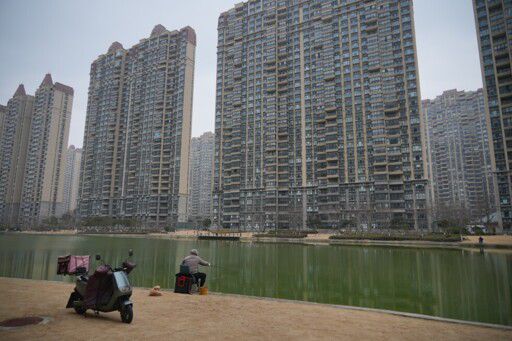
Wow crazy stuff. She saved up nearly 300kusd and rent is just over a 100usd a month. Whole apartments from 3k to 13k.
Retired and now does online yoga to pay the bills!
Good work. FIRE china style!
ol_capt_joe@piefed.ee
on 02 Mar 2026 19:13
nextcollapse
Guess how much 😁
Jax@sh.itjust.works
on 02 Mar 2026 19:46
nextcollapse
I too wish I could work in finance and save 300k
Tar_alcaran@sh.itjust.works
on 03 Mar 2026 06:08
collapse
Just work 996. Working 72 hour weeks will do wonders for your bank account, and murder your personal life.
The chinese way.
QinShiHuangsShlong@lemmy.ml
on 03 Mar 2026 12:38
nextcollapse
996 is way less common than you people seems to think. It was a fringe practice in ~40 companies during the tech boom. It has since been made illegal and is declining from it’s already fringe position.
From everything I’ve read it’s still a problem, only workers are being shafted harder by being coerced into ‘voluntary’ overtime.
Sounds very capitalistic, to me.
QinShiHuangsShlong@lemmy.ml
on 03 Mar 2026 14:30
collapse
I see two main issues with your comment. First, it feels like you’re relying mostly on non-Chinese sources here(correct me if I’m wrong). I feel if you were in China or actually reading Chinese-language reporting, you’d see that while overtime pressure and stuff like 996 still exist, the trend is clearly negative. As in, it’s being actively cracked down on. The Supreme Court ruled 996 illegal in 2021, and recent policy pushes like the 2025 Consumption Boost Plan are specifically targeting illegal overtime and pushing for better enforcement of rest/vacation rights. It’s not perfect, obviously, but it’s hugely improved from where things were in the 2000s, and honestly it’s just not the omnipresent norm that English-language coverage sometimes makes it sound like.
Second, capitalism vs. socialism isn’t really defined by work hours, pay conditions, or how hard people are pushed, that’s a misunderstanding of what those terms actually mean. What matters is who owns the means of production. In China, it’s without a doubt the people, exercising that ownership through the state. The state being the apparatus through which people collectively wield power. Around 70% of the largest companies are state-owned, and all the strategic sectors (energy, transport, telecoms, finance) remain under public control. So yeah, China is socialist. The real question isn’t if, just how far along it is in the transitional period that socialism entails.
Whatever my sources are more or less stated exactly what you’re saying — outlawing something in 2021 only to have to release further legislation in 2025 doesn’t exactly seem like a ‘solved’ problem to me. It is good that the trend is negative. Public control is one thing, however the ‘socialist’ country still produces billionaires which I simply struggle to understand as being socialist. Apparently wealth disparity simply doesn’t matter when talking about this topic (which I feel is pretty important when talking about China, we’re talking the top 10% in China owning two thirds of the wealth compared to the U.S. which is just 4 or 5 % higher than China’s).
Yes, I understand that the people apparently own the means of production — I still struggle to understand how that can be true with such high (and continuing to climb) wealth inequality. It just doesn’t add up, unless we’re willing to accept that China isn’t actually socialist but capitalist with socialist flavor.
QinShiHuangsShlong@lemmy.ml
on 03 Mar 2026 15:34
collapse
Apologies on advance for the length got very invested while typing this.
The 2021 ruling followed by 2025 reinforcement doesn’t mean the problem is “solved,” but that’s actually how good governance is supposed to work. You set a standard, you monitor where enforcement falls short, you gather feedback from workers and local courts, then you adjust the framework as necessary according to feedback. The Supreme Court explicitly ruled 996 illegal in 2021, and the 2025 Consumption Boost Plan reinforcing those protections after a period of monitoring and feedback is good governance. Chinese reporting shows this cycle in action: enforcement is still uneven, yes, but the trajectory is consistently toward stricter oversight. It’s not perfect, but the direction is clearly negative for illegal overtime practices, and that matters more than pretending one decree could fix decades of practice overnight.
On billionaires and inequality, I think the analysis China Has Billionaires helps clarify the confusion in English. As that piece explains, socialism isn’t defined by the absence of wealthy individuals or by hitting a specific Gini coefficient. It’s defined by who holds ultimate control over capital and whether the state can subordinate profit to social goals. In China, billionaires exist, but they operate within boundaries set by a socialist state. When tech platforms overreach, when property speculation threatens stability, when capital tries to dictate terms, the state steps in. The Jack Ma case is a good example here: when Ant Group pushed for high-risk microloan products that threatened people’s and the countries financial stability, regulators halted the IPO and restructured the company. That’s not capitalist logic. That’s capital being managed, not ruling. If we look at how capitalist states like the US or those in Europe have generally allowed high-risk consumer lending models like Klarna to expand with minimal restraint, the contrast with China’s intervention is fairly stark.
The same logic explains the 2021 crackdown on for-profit private tutoring. Excessive academic pressure was harming student wellbeing, but more fundamentally, the state moved to stop education from becoming a commodity where money buys advantage. China’s public schools remain the primary pathway to success, with the gaokao system designed to be merit-based. Contrast that with the US or Europe, where wealthy families can purchase extensive tutoring, legacy admissions, or even direct donations to secure college placement. The Didi case mentioned in the redsails article fits here too: when the company rushed a US listing while holding sensitive geographic and user data, regulators intervened, not to punish growth, but to assert that capital cannot override data sovereignty or social stability. That’s the socialist boundary in action.
Also the number of billionaires in China has plateaued and even begun to decline as redistribution mechanisms and regulatory pressure intensify. That’s consistent with a transitional socialist project: allowing market mechanisms to develop productive forces while retaining the political capacity to rein them in when they conflict with collective interests. And it’s worth remembering what the socialist state has delivered: over 800 million people lifted out of poverty, infrastructure built in less developed regions even when it’s not profitable because state-owned enterprises serve a redistributive role, and public systems that prioritize collective welfare over short-term returns.
The socialist principle for this stage isn’t “equal outcomes regardless of contribution.” High aggregate wealth inequality metrics can coexist with massive improvements in living standards, public infrastructure, and social mobility, which is precisely what China has delivered. The real test isn’t whether a few people get very rich, but whether the working majority sees their conditions improve and whether the state can redirect surplus toward collective needs. By that measure, China’s trajectory aligns with a socialist project navigating a complex, globalized transition. If you haven’t read it yet, the redsails piece walks through these tensions with historical context and avoids the checklist approach that often leads to premature judgments about what socialism must look like at every stage.
Edit:
Also a fun graph I found the data is from the world inequality database
I think you’re quite possibly the most reasonable .mler I’ve come across — I’ll have to look into more about what you’ve said, but I appreciate the read.
Not_mikey@lemmy.dbzer0.com
on 02 Mar 2026 20:29
collapse
This could be us if we let our housing bubble pop, but the people in charge will never let that happen. Can’t have people being able to afford to live working 20 hours a week, wouldn’t be generating nearly enough profits for our masters.
msage@programming.dev
on 03 Mar 2026 13:11
nextcollapse
It’s been repeatedly proven that lowering the weekly hours improves productivity.
So keeping the pressure is purely for fun.
LibertyLizard@slrpnk.net
on 03 Mar 2026 21:08
collapse
The bubble can’t pop until there’s sufficient housing, or a major economic collapse.
threaded - newest
Wow crazy stuff. She saved up nearly 300kusd and rent is just over a 100usd a month. Whole apartments from 3k to 13k.
Retired and now does online yoga to pay the bills!
Good work. FIRE china style!
Guess how much 😁
I too wish I could work in finance and save 300k
Just work 996. Working 72 hour weeks will do wonders for your bank account, and murder your personal life.
The chinese way.
996 is way less common than you people seems to think. It was a fringe practice in ~40 companies during the tech boom. It has since been made illegal and is declining from it’s already fringe position.
From everything I’ve read it’s still a problem, only workers are being shafted harder by being coerced into ‘voluntary’ overtime.
Sounds very capitalistic, to me.
I see two main issues with your comment. First, it feels like you’re relying mostly on non-Chinese sources here(correct me if I’m wrong). I feel if you were in China or actually reading Chinese-language reporting, you’d see that while overtime pressure and stuff like 996 still exist, the trend is clearly negative. As in, it’s being actively cracked down on. The Supreme Court ruled 996 illegal in 2021, and recent policy pushes like the 2025 Consumption Boost Plan are specifically targeting illegal overtime and pushing for better enforcement of rest/vacation rights. It’s not perfect, obviously, but it’s hugely improved from where things were in the 2000s, and honestly it’s just not the omnipresent norm that English-language coverage sometimes makes it sound like.
Second, capitalism vs. socialism isn’t really defined by work hours, pay conditions, or how hard people are pushed, that’s a misunderstanding of what those terms actually mean. What matters is who owns the means of production. In China, it’s without a doubt the people, exercising that ownership through the state. The state being the apparatus through which people collectively wield power. Around 70% of the largest companies are state-owned, and all the strategic sectors (energy, transport, telecoms, finance) remain under public control. So yeah, China is socialist. The real question isn’t if, just how far along it is in the transitional period that socialism entails.
Whatever my sources are more or less stated exactly what you’re saying — outlawing something in 2021 only to have to release further legislation in 2025 doesn’t exactly seem like a ‘solved’ problem to me. It is good that the trend is negative. Public control is one thing, however the ‘socialist’ country still produces billionaires which I simply struggle to understand as being socialist. Apparently wealth disparity simply doesn’t matter when talking about this topic (which I feel is pretty important when talking about China, we’re talking the top 10% in China owning two thirds of the wealth compared to the U.S. which is just 4 or 5 % higher than China’s).
Yes, I understand that the people apparently own the means of production — I still struggle to understand how that can be true with such high (and continuing to climb) wealth inequality. It just doesn’t add up, unless we’re willing to accept that China isn’t actually socialist but capitalist with socialist flavor.
Apologies on advance for the length got very invested while typing this.
The 2021 ruling followed by 2025 reinforcement doesn’t mean the problem is “solved,” but that’s actually how good governance is supposed to work. You set a standard, you monitor where enforcement falls short, you gather feedback from workers and local courts, then you adjust the framework as necessary according to feedback. The Supreme Court explicitly ruled 996 illegal in 2021, and the 2025 Consumption Boost Plan reinforcing those protections after a period of monitoring and feedback is good governance. Chinese reporting shows this cycle in action: enforcement is still uneven, yes, but the trajectory is consistently toward stricter oversight. It’s not perfect, but the direction is clearly negative for illegal overtime practices, and that matters more than pretending one decree could fix decades of practice overnight.
On billionaires and inequality, I think the analysis China Has Billionaires helps clarify the confusion in English. As that piece explains, socialism isn’t defined by the absence of wealthy individuals or by hitting a specific Gini coefficient. It’s defined by who holds ultimate control over capital and whether the state can subordinate profit to social goals. In China, billionaires exist, but they operate within boundaries set by a socialist state. When tech platforms overreach, when property speculation threatens stability, when capital tries to dictate terms, the state steps in. The Jack Ma case is a good example here: when Ant Group pushed for high-risk microloan products that threatened people’s and the countries financial stability, regulators halted the IPO and restructured the company. That’s not capitalist logic. That’s capital being managed, not ruling. If we look at how capitalist states like the US or those in Europe have generally allowed high-risk consumer lending models like Klarna to expand with minimal restraint, the contrast with China’s intervention is fairly stark.
The same logic explains the 2021 crackdown on for-profit private tutoring. Excessive academic pressure was harming student wellbeing, but more fundamentally, the state moved to stop education from becoming a commodity where money buys advantage. China’s public schools remain the primary pathway to success, with the gaokao system designed to be merit-based. Contrast that with the US or Europe, where wealthy families can purchase extensive tutoring, legacy admissions, or even direct donations to secure college placement. The Didi case mentioned in the redsails article fits here too: when the company rushed a US listing while holding sensitive geographic and user data, regulators intervened, not to punish growth, but to assert that capital cannot override data sovereignty or social stability. That’s the socialist boundary in action.
Also the number of billionaires in China has plateaued and even begun to decline as redistribution mechanisms and regulatory pressure intensify. That’s consistent with a transitional socialist project: allowing market mechanisms to develop productive forces while retaining the political capacity to rein them in when they conflict with collective interests. And it’s worth remembering what the socialist state has delivered: over 800 million people lifted out of poverty, infrastructure built in less developed regions even when it’s not profitable because state-owned enterprises serve a redistributive role, and public systems that prioritize collective welfare over short-term returns.
The socialist principle for this stage isn’t “equal outcomes regardless of contribution.” High aggregate wealth inequality metrics can coexist with massive improvements in living standards, public infrastructure, and social mobility, which is precisely what China has delivered. The real test isn’t whether a few people get very rich, but whether the working majority sees their conditions improve and whether the state can redirect surplus toward collective needs. By that measure, China’s trajectory aligns with a socialist project navigating a complex, globalized transition. If you haven’t read it yet, the redsails piece walks through these tensions with historical context and avoids the checklist approach that often leads to premature judgments about what socialism must look like at every stage.
Edit: Also a fun graph I found the data is from the world inequality database
<img alt="" src="https://lemmy.ml/pictrs/image/3195279c-7c9a-49b7-8585-b7b4f7232b1f.jpeg">
I think you’re quite possibly the most reasonable .mler I’ve come across — I’ll have to look into more about what you’ve said, but I appreciate the read.
Right
This could be us if we let our housing bubble pop, but the people in charge will never let that happen. Can’t have people being able to afford to live working 20 hours a week, wouldn’t be generating nearly enough profits for our masters.
It’s been repeatedly proven that lowering the weekly hours improves productivity.
So keeping the pressure is purely for fun.
The bubble can’t pop until there’s sufficient housing, or a major economic collapse.