Climate-Warming Methane Emissions from the World’s Biggest Livestock Companies Are Bigger Than From Major Oil and Gas Companies
(insideclimatenews.org)
from floofloof@lemmy.ca to world@lemmy.world on 22 Oct 2025 12:40
https://lemmy.ca/post/53815654
from floofloof@lemmy.ca to world@lemmy.world on 22 Oct 2025 12:40
https://lemmy.ca/post/53815654
cross-posted from: piefed.social/…/climate-warming-methane-emissions…
Ahead of the United Nations climate talks in Brazil, advocacy groups are pushing for companies and governments to set meaningful emissions targets to lower emissions from livestock.
The world’s biggest meat and dairy companies are responsible for emitting more climate-warming methane than all of the countries in the European Union and United Kingdom combined, according to a new assessment published Monday.
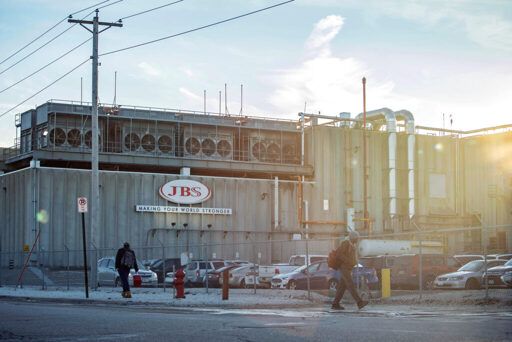
They looked at 45 major livestock and dairy companies, finding that they generated about 1 billion tons of greenhouse gas emissions in 2023—roughly the same amount as reported for Saudi Arabia, the world’s second largest oil producer.
#world
threaded - newest
Not that this isn’t a valid concern but it seems like something that the oil companies would push as this isn’t a valid comparison.
It’s trying to get you to think about how livestock emissions compares to fossil fuel emissions while omitting 80 or 90% of fossil fuel emissions.
Aside from getting people to eat less beef …… every year or two I see an article about food additives, such as certain algae’s, that help cattle produce less methane. But the story just disappears with no follow up. Whatever happens to those?
I assume part of it is cost but some of us already pay a little more for “pasture fed” “free range” “no growth hormone”. Where’s my “green” beef? I’d pay a bit more for that.
Or does it never actually pan out for practicality or taste or health or something
Why not just stop eating animals?
That’s a great “silver bullet” answer but not realistic. By all means it’s worth encouraging but you’re not getting there any time soon.
In the meantime, farming fewer ruminants helps as well as making progress in that direction. And for those ruminants we are still farming, food additives to modify their digestive products is a clear win. And if that makes animals more expensive to eat, maybe we start a virtuous cycle toward eating fewer animals
So then when do we get to the part where people stop eating animals? It seems to have been an obvious “silver bullet” for at least decades, it seems all your baby steps and “forward progress” ideas would’ve kicked in by now had they been actual viable solutions to the problem.
This study was proudly presented by Standard Oil.
And the next study claiming the opposite will be sponsored by Cattle Farmer Inc.
Livestock lives off green foods that produce oxygen and ties CO2 to grow, the oxygen then breaks down the Methane to CO2 which again is tied to the crops cows eat next year.
Oil burned has only the negative effect mostly CO2, while livestock is part of a cycle that would be sustainable if it wasn’t for the fossil fuels.
Yes, but meat demands are also deforesting huge swathes of land all over the world. Then, instead of forest that are carbon-negative you get pastoral lands and cattle that are carbon-positive.
Brazil’s deforestation is the world’s most extreme. It is at a point now (due to deforestation and livestock) where the Amazon rainforest is no longer a carbon sink and now emits more greenhouse gasea than it absorbs.
You can use that argument for everything that isn’t run in a sustainable manner. The same can go for growing vegetables that are not for animal feeding but human consumption. But it can be done in a sustainable manner, and obviously that was what I meant.
Last I heard the land recovered from deforestation in Brazil is not very good, and generally cannot sustain their crops for long, the land becomes infertile, and they continue the deforestation.
This is unsustainable no matter what the crop is or is for. And is not a good argument against farming that is sustainable.
It especially sucks when it’s rain forest that is lost, because it is extremely hard to get to recover again. I live in Denmark, and we produce 3 times more meat than we consume, and that is done with sustainable farming. Most of the farmland we have today used to be infertile heathland, and took decades to improve into fertile farmland.
Many countries have similar types of land that can be improved, so the problem is that they don’t do that instead of destroying valuable land.
But to make it work requires government incentives to do that instead of ruining fertile lands and then just move on when the soil is depleted.
Nice cope you got there
So fix both!