Built to peak: Coal power expansion runs out of room in China – Centre for Research on Energy and Clean Air
(energyandcleanair.org)
from Hotznplotzn@lemmy.sdf.org to world@lemmy.world on 03 Feb 06:52
https://lemmy.sdf.org/post/50183205
from Hotznplotzn@lemmy.sdf.org to world@lemmy.world on 03 Feb 06:52
https://lemmy.sdf.org/post/50183205
cross-posted from: lemmy.sdf.org/post/50183000
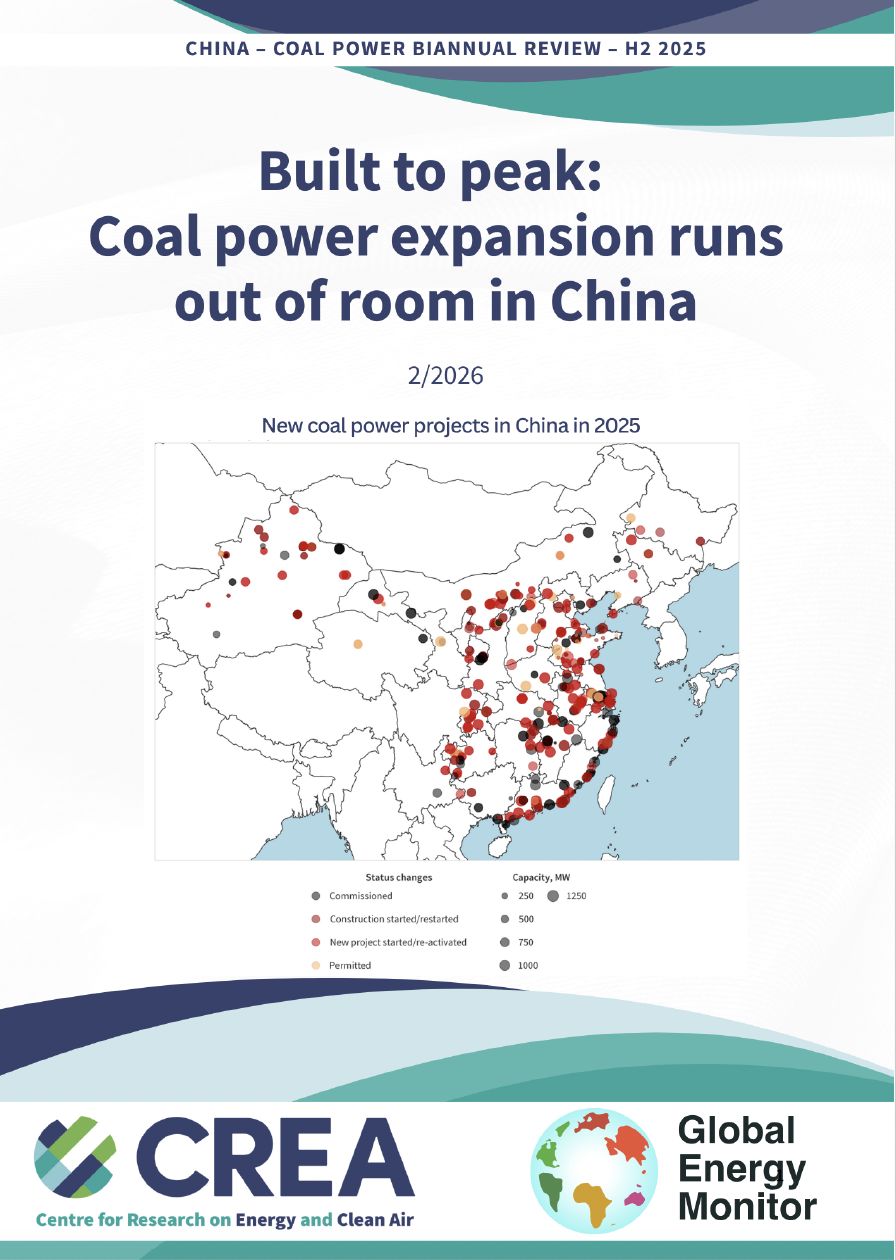
In 2025, China’s new and reactivated coal power project proposals surged to a record high, while capacity additions that came online reached the highest annual level in a decade, even as clean energy put China’s CO2 emissions into reverse for the first time and drove down coal power generation.
TL;DR:
- 2025 saw China’s current coal power build-out cycle reach a new high. Coal power capacity additions reached their highest level in a decade, even as coal power generation declined, and clean energy met all net growth in power demand.
- New and reactivated coal power project proposals surged to a record high. If built, the projects proposed in just this one year would commit China to years of coal expansion beyond power demand growth and climate requirements, reflecting a rush by the coal industry stakeholders to advance projects ahead of tighter policy constraints.
- With a large pipeline of projects still under construction and permitted, rapid growth of coal power capacity risks extending into the early years of the 15th Five-Year Plan (FYP) period, while coal power retirements remain low.
- Meeting China’s 2030 Nationally Determined Contribution (NDC) target implies a shift away from baseload coal power and a decline in operating hours. Yet coal capacity commissioned in 2025, and much of the remaining pipeline, remains dominated by large units designed for high-utilisation, reflecting incentives that favour energy and capacity over flexibility.
#world
threaded - newest
I think it’s worth noting that all this energy is needed for all the manufacturing that we demand. Western countries aren’t blameless in this.
No. Just read the article. Most solar panels China produces sit and do nothing. Instead of investing into the domestic grid, China pursued a policy to subsidies production even as the output is not needed, neither in China nor in the world. The only thing Western countries are to blame is that they didn’t ban cheap Chinese tech already back in the 2000s (industry experts have warned about this even then).
This problem has intentionally been “Made in China.” Something like this happens if a centralized government wants to gain control over entire supply chains while ignoring economic realities.
China’s government has been getting a lot wrong here for a long time, and by now there seems to be no intention to correct course. There are many excellent analyses that proof this, for example, one is here:
Well my point was basically this:
But you’re right, I started reading with an agenda and got the wrong point.
You’re implying it was the government’s intent rather than incompetence?
I wouldn’t say incompetence in that there are many excellent experts in China who perfectly know -and always knew- a better way forward. The problem imo is that they have nothing to say, and everyone who dares to express an even slightly different opinion than the central government risks to get in big trouble.
As an example: Because China wants to achieve its planned GDP growth, political leaders in the provinces are given ‘targets’ by the central government for their regional output. To reach this target (and secure their political careers?), they build coal plants and other infrastructure, although they are often not needed. As regional leaders want to achieve their local GDP goals, there is also little incentive to collaborate with each other - such as in joint grid investments that would enable them to share resources. (The central government has announced it will invest in its countrywide grid some time ago, but so far nothing tangible has happened.)
One result is excessive overcapacity in a large number (all?) sectors.
Where I live, we have plenty of experts, and the current government largely ignores their advice. I’m not sure this is any different.
Anyway, I just learnt something, so I’m going to back away now. Have a good day.
Yes, but think of all the news releases about Chinese hyper-advancement they precipitated while sitting idle! /s
Exporting to the West is still a heavy cause of that demand that’s not being met, though. It seems like there’s responsibility going a few ways.
Actually western countries are completely blameless here. Why would western countries be blamed for Chinese emissions? Western companies could be blamed sure but when it comes to climate we expect this to be handled at a policy level. When we look at this issue we see that Western countries did make policy changes that hurt their manufacturing and growth in pursuit of better climate change outcomes but china didnt. So when it comes to blame no one forced China to undercut manufacturing by artificially deflating their currency, lying about climate change goals and having no environmental regulations. China could have implemented environmental regulations and labour laws on par with the west. They could have started transitioning to renewables a decade and a half earlier. They choose not to and they choose to scale coal knowing the damage they are doing to the world.
Hell they still lie about their climate change impacts and sponsor green washing propaganda media overstating their progress. Their emissions graph looks like the stock market and when it drops .8% “people” act like its about to come crashing down.
There is no way we would talk about this the same if Europe got rid of their min wage,labour laws, environmental laws, and invested in non clean energy and manufacturing.
Isn’t that like saying I’m morally fine for knowingly buying stuff made with slave labour because they aren’t my slaves?
No I dont think thats equivalent. Climate change emissions is an issue that needs to be addressed on a country scale. We dont blame individuals for climate change.
Its fine to let the blame rest on china for their own emissions. They intentionally choose that route.
If a company comes to new Zealand their emissions are regulated by the nz government and nz is responsible for those emissions. In no reality would we blame another country.
I honestly think we should.
If I’m a massive climate polluter, say, I use a lot of coal to produce steel. If my company decides to set up a subsidiary in China to make it, then claims they just reduced their climate emissions by 90%, I would say that’s a bunch of bullshit, all they did was move where the chimneys were.
I’m an advocate for having carbon credits decided based on supply chains not based on borders, otherwise all we do is move our pollution to countries that don’t care.