Spacecraft from Chinese launch nearly slammed into Starlink satellite, SpaceX says
(www.space.com)
from MicroWave@lemmy.world to world@lemmy.world on 13 Dec 2025 16:25
https://lemmy.world/post/40147743
from MicroWave@lemmy.world to world@lemmy.world on 13 Dec 2025 16:25
https://lemmy.world/post/40147743
“As far as we know, no coordination or deconfliction with existing satellites operating in space was performed, resulting in a 200 meter close approach between one of the deployed satellites and STARLINK-6079 (56120) at 560 km altitude.”
#world
threaded - newest
Kessler syndrome seems increasingly inevitable as we potentially approach some of the great filters that explain why we’ve never met or detected any other civilizations in the universe. It’s been a fun ride, folks, but it seems like we might not have threaded this particular needle, finding it was ultimately narrower and our thread thicker and clumsier than we expected and we might instead be reaching the end of the road on our multiplanetary ambitions. Will we get to Mars? Maybe. Will we survive and thrive there? Doubtful.
Jumping from Kessler syndrome to Great Filter is a drastic and unwarranted step. Kessler syndrome is temporary, the debris is in a low orbit where atmospheric drag gives it a lifespan of years to decades. And even if it wasn't, it only makes orbits within those debris belts dangerous, it doesn't prevent you from launching through them.
It might not prevent launching through it, but for the years LEO is fucked, you’d need extra armor to withstand potential hits which would eat into your payload capacity.
Right, that's exactly what I said.
A "Great Filter" is something that stops every civilization from ever expanding off its home world. Kessler Syndrome does not in any way fit this. It's a temporary inconvenience that isn't even guaranteed to happen.
I wasn’t trying to refute what you said, I was trying to expand on your “it doesn’t prevent you from launching through them.” by explaining the downsides of going through it.
It’s not as simple as just going through it, there are real implications for those years.
It actually is that simple, though. The amount of time that a launcher spends in one of those Kessler Syndrome zones while it passes through to a higher orbit would be measured in minutes. You can likely just ignore it and write off the one-in-a-million times your launcher hits something as just the cost of doing business.
Kessler Syndrome is a problem for satellites that want to orbit within those zones long term, as in spending years in there.
I think the odds would depend on how big the debris field is, but for non human cargo that might be acceptable, but I have a feeling that might not be the case with people on board, in which case they would need armor.
Edit: for non human cargo it could even be an option. Armored + X payload weight for $100/kg. Unarmored $60/kg + Y payload weight. (Made up numbers)
I often wonder if environmental degradation could be the end of the line for humans, and if it might even be Great Filter material. Have other civilizations discovered the usefulness of fossil fuels, only to be ignorant, then apathetic, about their major downsides?
Why would one assume that every civilization is going to have access to fossil fuels in the first place? Earth has coal and oil because of a specific sequence of events that don't necessarily follow.
Also, the severity of climate change that we're facing is in no plausible way "end of the line" for humans. It could be disruptive to our current civilization but it's not going to end us. One could even easily hypothesize alien planets where induced global warming would be an enormous benefit to a civilization living on it. Just a few tens of thousands of years ago major regions of Earth were covered with ice caps, if our civilization had arisen back then a case could be made that accelerating their melting would be beneficial in the long run.
This isn't really Great Filter material.
Kessler syndrome isn’t possible with these LEO constellations.
They are so low the debris would just deorbit themselves in a couple years.
It’s the much much higher orbits where they stay forever that is the problem.
Even the higher orbits aren't as big a problem as might be assumed. There are still mechanisms other than aerodynamic drag that clear debris from those orbits, they're just slower. And the combination of fewer high-altitude satellites and much bigger orbital volume make it harder to get a dangerous density of debris going in the first place.
Kessler syndrome is something the Internet loves to talk about without truly understanding.
These satellites fly at a very low orbit, and will deorbit themselves within a few years if they go dead. They would likely deorbit even faster if there was a debris cloud following a collision.
We’re not going to be locked out of space for generations, not by any means.
Maybe, but not always. Debris from a collision can be flung in all directions, including higher orbits.
Thankfully, those higher orbits probably won’t be long term stable since the perigee will pretty much always be at the point of impact. But it could very well be stable for years, since most of the orbit won’t be dragging through the atmosphere anymore.
But the real risk is a cascade effect. One hit can create thousands of pieces of debris, which may well cause another hit. Etc etc.
Possible, but not at all likely. The joy of orbits are they’re pretty predictable because after the energy is applied the object just keeps following a path. To get a higher circular orbit would require deceleration at the right point to stabilize it. If this doesn’t happen, and it doesn’t in a collision, you will have a new orbit that will more or less pass through the altitude of the impact. So while it may have a higher apogee, it will have a lower perigee, which means it will suffer more drag due to more atmosphere. So the vast majority of debris from the collision of a LEO satellite collision will naturally deorbit, possibly faster than if the satellite hadn’t just become inert in its orbit.
If NASA could have built an actual base and shipyard, instead of being forced to JUST LAND A MAN ON MOON…I think we could be on our way toward Vulcan contact.
This timeline, just go hookers and blow cause it’s all fucked. Adding Kessler syndrome to exit velocity planing is just sticking the stick in the tire wheel
First article title using slam correctly. I love it.
That’s not a good thing, they’ll just see this as a win and start using it even more.
Look at how great SLAM did on that article!
Kinda inevitable when you keep throwing all that crap up there.
Yeah the solutions that require thousands and thousands of satellites for one service… think of a better idea you morons.
Don’t forget how hundreds to thousands of them routinely fail and/or otherwise deorbit themselves, thus necessitating constant replenishment.
Its basically the least sustainable, most insane space paradigm currently actually possible with our tech and resources.
After all, I’m sure we can just undo a Kessler Syndrome cascade effect.
Right?
It’s literally the brute-force approach to Internet service
The low orbits that need to be constantly maintained or they naturally deorbit are the exact opposite of Kessler Syndrome. If every Starlink satellite was to disintegrate right now, the majority of the debris would be gone in 5 years.
After 5 years of aluminum dust coating every surface on the planet… I can’t imagine that would be good for us to breathe, and drink.
That’s a great point, and has almost nothing to do with Kessler Syndrome. But what can I say? I live near a city where the leaders of a few nations decided it would be fun to test the effects of fallout by releasing radioactive dust over it. Aluminum oxide is pretty benign, comparatively.
Certainly, the consequences of our actions need to be considered, but let’s stick to the legitimate ones, such as what you listed, and not the highly improbable ones such as Kessler Syndrome.
… Unless they functionally constitute a massive, fast moving, kind of net, that anything trying to climb to a higher orbit has to pass through, and hope to not collide with, as showcased by this article we are commenting on.
Anything that’s trying to break through VLEO, well, if a collision happens on its way to LEO, or beyond, some of those debris will be headed to LEO or beyond.
That’s not really how orbits work. Unless there is a stabilizing burn or very unusual conditions the debris will have an eccentric orbit, going both lower and higher than the impact point. And passing below the orbits of the starlink satellites will expose them to even more atmosphere than they will be at the starlink orbit, so their orbits will decay faster than their apogee would suggest. Sure, some will experience the right conditions to put them in an orbit such that the perigee is at the altitude of the starlink orbits or even higher, but the vast majority will not.
This does not preclude carelessness or malice causing impacts, the launch in question being the former and China’s satellite destruction previously being the latter. Do you think Starlink isn’t releasing their orbital paths to other launch organizations? And that net is generally very predictable. Any deviation from the existing orbit is done at the expense of the lifespan of the satellite and while there are a lot of those satellites, there’s far more empty space between them. The kind of planning that rocket launches normally get is more than enough to hit those windows, along with the other windows rocket launches normally have to hit.
Ok, so you admit the scenario I describe is possible, just not ‘likely’ in your view… after initially dismissing it.
Did you read the article?
What happened was not that the whole main rocket zoomed right past a Starlink Sat, while still doing the initial burn sequence.
What happened was:
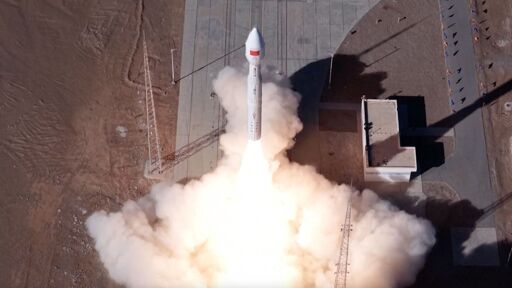
… One of the sats released by Kinetica 1 whizzed by SL6709 at a 200m distance. 48 hours after the Kinetica 1 launch.
So… that would have occurred during when said K1 deployed sat… was doing some kind of orbital stabilization manuever, most likely, no?
Either that, or, even worse… it wasn’t, it doesn’t have much of its own ability to trim and adjust its own orbit… which would mean it is just stuck, on an eccentric orbit, possibly stable, possibly not… that crosses above and below the altitude Starlink sats are at… and there’s like ten thousand of them…
… which CAS Space does not seem to either have accounted for, or have the ability to account for.
So yeah the situation that is currently occuring, that is from the article we are talking about, yeah, that does not to me seem like an unlikely thing, given that it is, or something pretty close to it, seems to be currently happening.
Given that CAS Space said:
That would seem to me to imply that they had previously been in contact with SpaceX, to be able to coordinate launches and do trajectory deconfliction… but that this coordination ceased… for some reason.
payloadspace.com/china-calls-nasa-on-orbital-conj…
Looks like China’s been asking for help from NASA with this sorta stuff in the last few months… I guess SpaceX didn’t get the memo?
Nobody’s sure what the … correct procedure or chain of command is here?
… Does Starlink actually publish and make all its Sat locations snd trajectories, in highly accurate detail, available to Chinese space companies/agencies?
Thats a legitimate question, I don’t know.
You’d have to have basically a real time syncronizhed data sharing operation going on, given how many Starlink sats there are, how often they make orbital adjustments or fail.
Fuck spaceX and fuck Musk, both of them should go to Mars and never come back.
Space Jam
personally, i think all satellites live positions should be public at all times, with launching them being more accessible, it becomes harder to coordinate everyone who may or may not have a satellite.
I think they are and that’s why it’s ridiculous. China for sure is aware of all satellite positions, regardless of public databases.
Seems more like an incompetence thing, but then again we see how they behave in Philippine waters and in general. They don’t give a fuck and think the world belongs to them.
And so do the US, and especially Musk. So what happens when an unstoppable force meets an immovable obect?
I know the answer for that. A lot of shrapnel will happen - that will eventually hit and damage other spacecraft.
I disagree, I think satellites should be launched freely and at will by any private party, consistent with the non aggression principle, and without the state applying authoritarian industry killing regulation through a monopoly of violence.
There you go: satellitetracker3d.com
There are a few sites like celestrak.org hosting TLEs for all satellites and some debris, which allow you to calculate current and future positions yourself. They are published by NORAD (North American Aerospace Defense Command) since 2003.
These aren’t super critical information. While we know where they are, it’s not always public information what they do exactly.
ACTUAL SLAMMING IN THE NEWS
Nearly
Get it