from Hotznplotzn@lemmy.sdf.org to world@lemmy.world on 05 Jan 16:02
https://lemmy.sdf.org/post/48534906
cross-posted from: lemmy.sdf.org/post/48534744
[…]
While Indigenous families [in the Central African region] often live in forests or their surroundings, as the NGO Association pour le Respect des Peuples Authoctones, du Développement Durable et des Droits de l’homme (APRA2DH) said in an interview with Global Voices, their way of life is under threat. The Republic of Congo has awarded licenses for logging to some Chinese who have accelerated deforestation, and according to research from Mongabay, this is putting these groups’ traditions and way of life at risk.
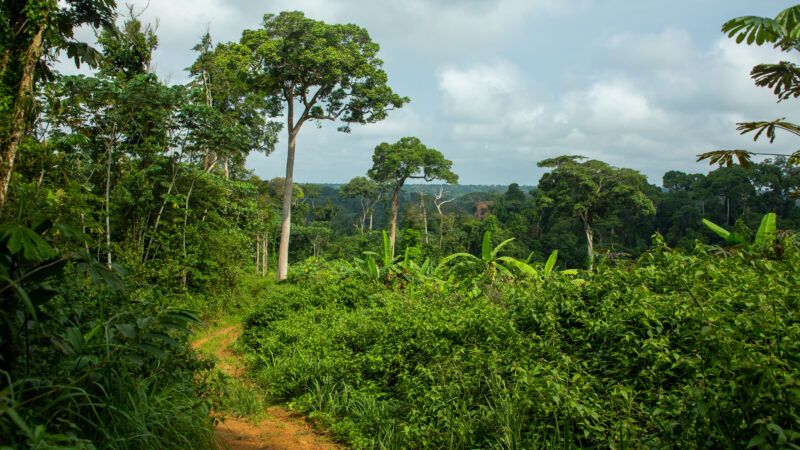
The decline of the forest, following extractive work, deforestation, agricultural expansion, illegal logging, and other activities in the forest areas of Congo, is shrinking the habitat of Indigenous peoples.
This reduction in forest areas has also taken away Indigenous peoples’ ability to apply their traditional knowledge on environmental protection, leading to further harm to the forest. Their skills are being thwarted in the face of the over-industrialized production and extraction, especially in recent days.
[…]
In Congo, as in other African countries, relations with China are at their zenith, driven by a series of projects known as the Belt and Road Initiative (BRI), Beijing’s large-scale international investment and connectivity plan. China has made inroads in diplomatic cooperation, mining, investment, construction, and many other fields in Africa.
[…]
However, civil society rights groups in the region have bemoaned the Congolese Government’s failure to implement regulations or guardrails to protect local people, as noted by Blanchard Cherotti Mavoungou in an interview with RFI. He added that Chinese companies are often not monitored or regulated, leading to negative consequences for Indigenous groups, as some have been expelled from their own lands.
[…]
Indigenous peoples remain second-class citizens, and are treated like sub-humans or slaves or even “pets.”
[…]
Blanchard Cherotti Mavoungou, president of ARPA2DH, is sounding the alarm:
“Indigenous populations do not benefit from the agreements signed between Congo and various partners, including China. On the contrary, if these companies come, they are in complicity with certain authorities, such as in the mining sector. These companies do not carry out environmental and social impact studies. Indigenous populations are not taken into account.”
[…]
The rights group leader believes that there is no respect for what is written in the specifications because there is no follow-up. “Our Indigenous populations are set aside, and Indigenous people do not benefit from relations between China and the Congolese government."
[…]
#world
threaded - newest
That’s suprising, because they are very respectful of their own minorities and the minorities in their neighbouring countries /s