Reverse-engineering Prose From Internet Lingo
(aartaka.me)
from mesamunefire@piefed.social to programming@programming.dev on 29 May 20:41
https://piefed.social/c/programming/p/2099937/reverse-engineering-prose-from-internet-lingo
from mesamunefire@piefed.social to programming@programming.dev on 29 May 20:41
https://piefed.social/c/programming/p/2099937/reverse-engineering-prose-from-internet-lingo
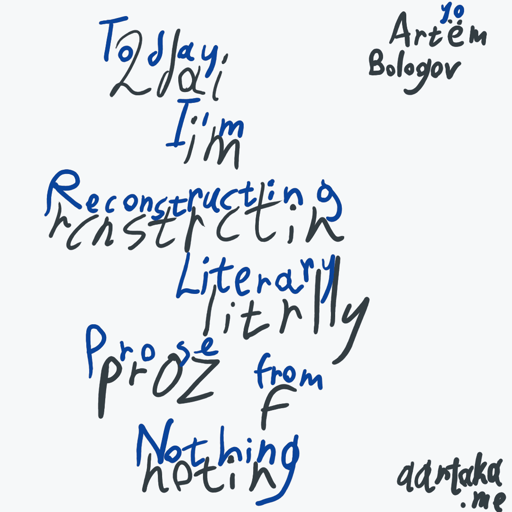
Internet learned to speak gibberish that doesn’t always coincide with literary text. But it can be converted back to that. Here’s my experiment along these lines.
#programming
threaded - newest
looks bemused
I don’t do that much Lisp, mostly use it for emacs, but I’m pretty sure that it’s not.
opens emacs
OK. So far so good.
(setq foo 1)
(print FOO)

Debugger entered--Lisp error: (void-variable FOO)
  (print FOO)
  (progn (print FOO))
  eval((progn (print FOO)) t)
  elisp--eval-last-sexp(nil)
  #f(compiled-function () #<bytecode 0xf6febdfec01a>)()
  eval-last-sexp(nil)
  funcall-interactively(eval-last-sexp nil)
      command-execute(eval-last-sexp)
Elisp sure doesn’t look to be case-insensitive. Maybe he meant some specific variant? Common Lisp?
Apparently sbcl’s REPL doesn’t support readline.
Huh. Looks like with readline, I also get cursor flashing to do paren matching, kinda like emacs can do. I had no idea that readline could do that. Apparently Common Lisp doesn’t do
setqeither.more experimentation
Huh. So, yeah, I guess that Common Lisp is case-insensitive. That is a bit wild. I guess I do remember vaguely seeing old Lisp stuff with keywords in all-caps.
Is Scheme?
Apparently the guile REPL doesn’t support readline either. God.
And it looks like “print” is “display” in Scheme-land.
Okay, so that’s the syntax. Case-insensitive?
Nope.
I kinda feel like there are Lisps that the author could have used if they wanted Lisp and case-sensitivity, if that was the major irritation.